" ARAB TRADERS AND THE SPICE ROUTE "
- By Alagu Kannan
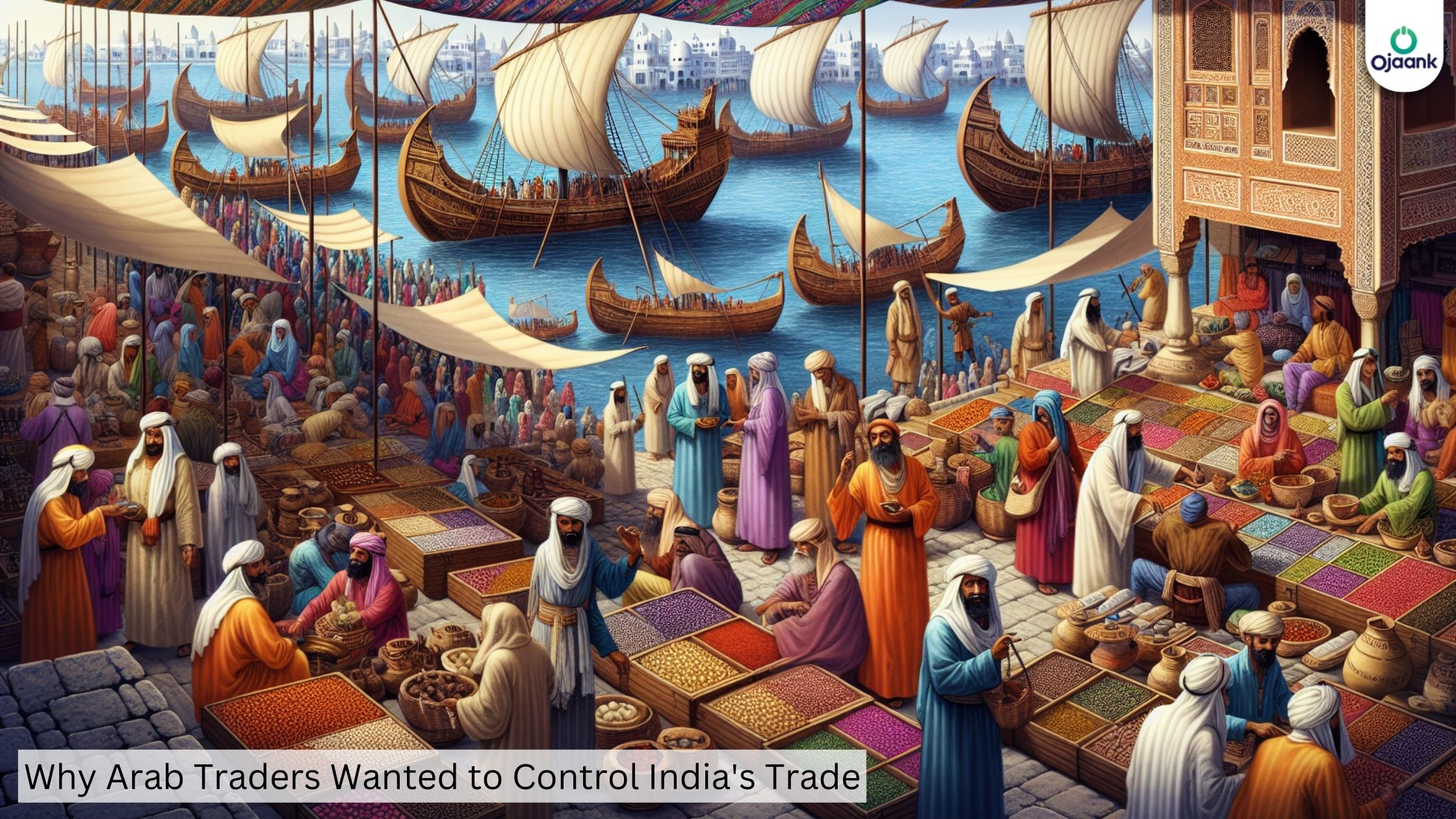
The story of arab traders arriving in India is one of the most fascinating parts of world history. Long before European explorers like Vasco da Gama sailed to Asia, Arab merchants were already crossing the Arabian sea. They connected India’s Malabar coast, even today’s Kerala with markets in Arabia, Africa and the Mediterranean world.
But this story is not only about trade. It is also about culture, faith, and human connection. Through centuries of peaceful exchange, Arab traders helped shape Kerala’s society leaving behind a legacy that still lives on today.
Talking about Early Maritime Connections
Arabia’s location between Africa and Asia made it natural center for sea trade. In the early 1000B.C., The sailors from Arab were using the the monsoon winds to travel safely across the Arabian sea. These seasonal winds, which were below steadily in one direction for months, made the long distance voyages possible. There are even the ancient references to this trade. Some scholars believe that the Biblical port of Ophir, mentioned in connection with King Solomon,s trade in gold and species but they have been located near Kerala. Ships which carried valuable goods such as ivory, gold, peacock and also exotic species beginning a connection between Arabia and India that would last for more than two thousand years.
By the time of the Roman Empire, Kerala had already become famous as the heart of the global spice trade. Ports like Muziris, Kodungallur,Kollam and Calicut were busy international centers. Traders came not only from Arabia but also from Egypt, Persia, and even China. Among all these trading groups,the Arabs built the strong and the most lasting networks. That way they became the main and important exporters of Kerala's most valuable products such as pepper, cardamon, and cinnamon spices that were considered as precious as gold in the ancient world.
Kerala: The Gateway of the Spices Route
Kerala’s geography made it the perfect gateway for trades. Its long coastal line and calm backwaters and safe harbors were ideal for sailing the ships. The monsoon winds allowed Arab traders to plan the regular journey between Arabia and India each and every year. Historians often describe Kerala’s ort as'connecting nodes of trades between the East and west.’ ships from Arabia brought goods like fine textiles, horses, dates and alos perfumes. In return they took the black spices, gems, ivory and whole lot of other treasures from India.
This exchange went beyond the business. It encouraged the sharing of knowledge and skills also. Arabs brought the advanced techniques in navigation and shipbuilding in return whenever they came to India traditions in science, medicine and culture. Over time some Arabs merchants decided to stay permanently in Kerala. They married local women and built small Arab communities along the coast. This was a very peaceful blending of culture that created a unique coastal identity that can still be seen in Kerala's architecture, cuisine and social traditions.
The Peaceful Spread of Islam
Perhaps the most meaningful result of Arab contact was the spread of islam among south India. Unlike in many other regions, Islam came to Kerala but not through war or conquest but through trade and in search of friendship. Arab traders from Yemen, Oman and Hadramut brought their faith to them but they never tried to impose it. The locals who lived in the villages were impressed by their fairness and their respectful behaviour. Intermarriages between Arab men and women living locally was the reason to create the Mappila muslim community. All the mappilas combined together to develop their own language, songs and varieties of food. One of the most famous symbols of this early cultural exchange is the cheraman Juma Masjid in Kodungallur is believed to be the first mosque in India. Some say that it was built with the blessing of a kerala king who converted to islam after meeting arab traders.
Economic and cultural Influence
Between the 700 and 1750 A.D., the Indian ocean trade network became one of the most advanced systems in the world. Kerala played a key role in this global system travelling along sea routes controlled by Arab navigators. Kerala was famous for the trade in pepper. In the middle east in Europe pepper has become the symbol of luxury and power. All the wealthy families around there treated it as a treasure and people also used it as currency in some places but the influencers in Arab went far beyond spices. There was also an exchange of knowledge and ideas. Arab and Indian scholars shared their discoveries in mathematics and medicines..
The End Of Dominance
In the late 15th century, everything changed when European explorers began to look for direct sea routes to India in search of spices. In 1498, Vasco da Gama from Portugal reached the Calicut marking the start of European colonial influence. Even though Arab political power declined their legacy never disappeared in Kerala even some words from Arabic entered the local Malayalam language.
Conclusion:
According to me the Arab traders in India were much more than a story of trade it seems more like a connection and coexistence. It gave rise to new communities, new ideas, and even shared a history that still binds two regions together. Today when we look at Kerala’s rich and diverse culture we can still see the footprints of those early Arab traders and the story reminds us taht trade can be more than just a profit when it is guided by friendship and understanding it can unite people across oceans over centuries.
References:
Babu, M., Dr. Faisal. Early Arab Trade with India: With Special Reference to Kerala. Department of History, University of Calicut, n.d. PDF.
Chaudhuri, K. N. Trade and Civilisation in the Indian Ocean: An Economic History from the Rise of Islam to 1750. Cambridge University Press, 1985.

Comments
Post a Comment